The very first central IP video camera, the Axis Neteye 200, was released in 1996 by Axis Communications and was developed by the group of Martin Gren and Carl-Axel Alm. Though promoted based on its direct accessibility from anywhere with a web connection, the electronic camera could not stream real-time motion video. It was restricted to a picture image each time the cam was accessed. At the time of launch, it was considered incapable of running as a motion camera due to what was at the time, "enormous" bandwidth requirements. Therefore it was aimed primarily at the tourist market The Axis Neteye 200 was not meant to replace traditional analogue CCTV systems, given that its capability was limited to simply one frame per second in CIF, or one every 17 seconds in 4CIF resolution, with an optimum resolution quality of 0.1 MP Axis used a custom exclusive web server called OSYS, yet by the summer season of 1998, it had started porting the electronic camera software application to Linux.Axis likewise launched documents for its low-level application programs interface (API) called VAPIX, which constructs on the open standards of HTTP and real time streaming protocol (RTSP). This open architecture was planned to motivate third-party software makers to establish compatible management Additional reading and recording software application's.
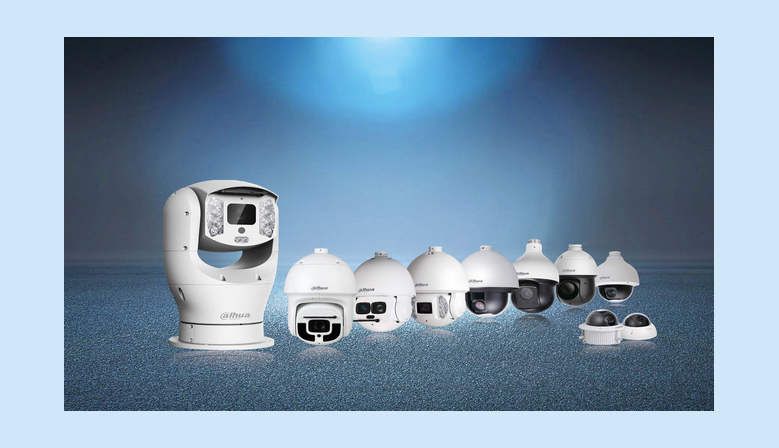
The very first decentralized IP video camera was released in 1999 by Mobotix. The cam's Linux system included video, alarm, and recording management functions. In 2005, the first IP video camera with onboard video content analytics (VCA) was released by Intellio. This video camera had the ability to find a variety of various occasions, such as if an item was stolen, a human crossed a line, a human got in a predefined zone, or if a cars and truck moved in the wrong direction.Standards Previous generations of analog CCTV video cameras utilize established broadcast television formats (e.g. Typical Intermediate Format (CIF), NTSC, FRIEND, and SECAM). Considering that 2000, there has been a shift in the consumer TV company towards high-definition (HD) resolutions (e.g. 1080P (Full-HD), 4K resolution (Ultra-HD) and 16:9 widescreen format). IP cameras might differ from one another in resolution, functions, video encoding schemes, offered network procedures, and the API for video management software application. IP video cameras are available at resolutions from to 29 megapixels.
To deal with IP video security standardization issues, 2 market groups formed in 2008: the Open Network Video User Interface Forum (ONVIF) and the Physical Security Interoperability Alliance (PSIA). PSIA was established by 20 member business consisting of Honeywell, GE Security, and Cisco. ONVIF was founded by Axis Communications, Bosch and Sony. [11] Each group now has various extra members, hence; video cameras and recording hardware that operate under the exact same standard can deal with each other. house electronic camera This section may require clean-up to fulfill Wikipedia's quality requirements. The particular issue is: Unreliable sources. Please help enhance this area if you can. (November 2019) (Find Out how and when to eliminate this design template message)ra or a Ptz video camera. Fixed electronic cameras are normally used to keep an eye on a set of locations, whereas a PTZ camera can be utilized to either track motion or manually change the monitoring area. Outdoor wired cameras, likewise referred to as A/C powered electronic cameras, are placed in outside environments. They are created to survive weather condition conditions, such as heat, cold, and rain, and are generally efficient in recording video in low light conditions. They are typically rated IP65/IP67 standards to withstand the outside environment. Wired (Air Conditioning Powered) or Wired totally free cameras for houses are IP cameras that have their own independent source of power, such as a Solar panel or Battery.